Product Overview
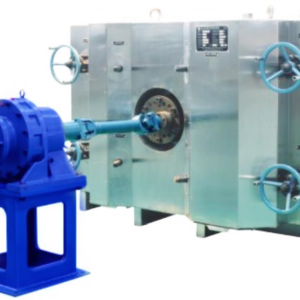
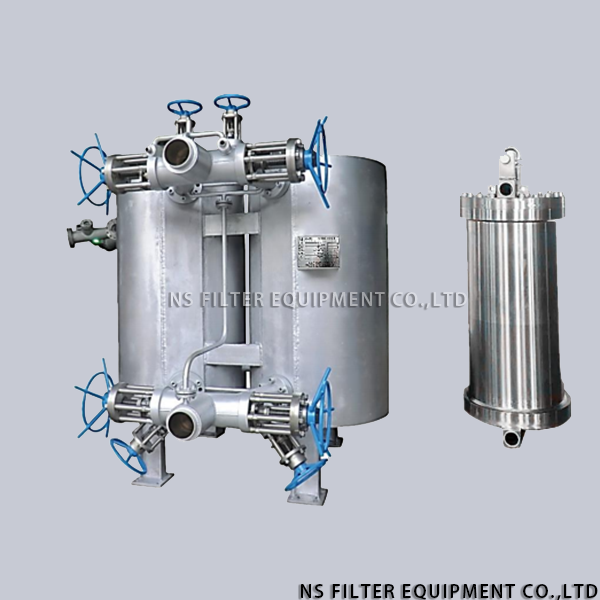
The Prepolymer Melt Filter is a specialized continuous filtration system designed for high-viscosity polymer melt purification in the chemical fiber and plastics industries. Engineered for critical applications such as polymer granulation, direct spinning, and continuous polycondensation processes (including PET, PBY, Nylon 6), this filter effectively removes gels, carbonized particles, filler agglomerates, and other contaminants to ensure uniform dispersion and consistent product quality.
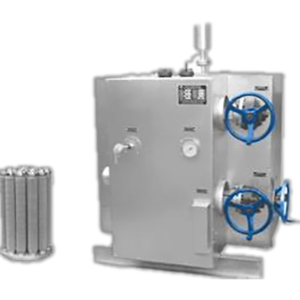
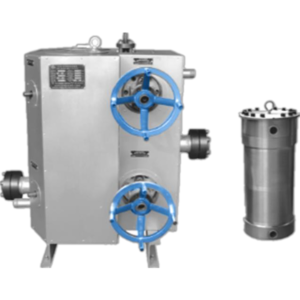
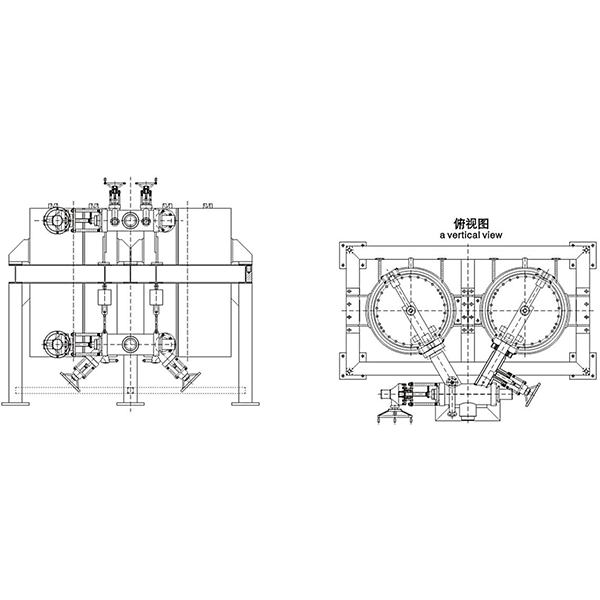
The filter features a dual-chamber design with one active and one standby chamber, enabling continuous, uninterrupted operation during screen changes—a critical advantage for high-throughput production lines.
Key Applications
| Application Area | Specific Processes |
|---|---|
| Polymer Production | PET, PA6, PA66, PP, PE, PU, PBT, PBY |
| Fiber Manufacturing | Polyester fiber, nylon fiber, special fibers, carbon fiber precursors (PAN) |
| Spinning Processes | Polymer direct spinning, slice spinning, spunbond nonwoven |
| Plastic Processing | PVC, PBT, PA, PP, PE, PS granulation production lines |
| Petrochemical | Continuous polycondensation, resin production, dope filtration |
Technical Specifications
Standard Model Parameters (CPF-PT Series)
| Model | Pipe Diameter (mm) | Filtration Area (m²) | Rated Flow Rate | System Pressure | Biphenyl Jacket Pressure | Allowable Differential Pressure | Working Temperature | Filtration Accuracy |
|---|---|---|---|---|---|---|---|---|
| CPF-PT-19J-H | 80 | 19 | 110 T/d | Max 25 MPa | ≤0.6 MPa | Max 8 MPa | ≤320℃ | 3–100 μm |
| CPF-PT-31J-H | 80 | 31 | 180 T/d | Max 25 MPa | ≤0.6 MPa | Max 8 MPa | ≤320℃ | 3–100 μm |
| CPF-PT-37J-H | 80 | 37 | 220 T/d | Max 25 MPa | ≤0.6 MPa | Max 8 MPa | ≤320℃ | 3–100 μm |
| CPF-PT-48J-H | 100 | 48 | 280 T/d | Max 25 MPa | ≤0.6 MPa | Max 8 MPa | ≤320℃ | 3–100 μm |
| CPF-PT-61J-H | 120 | 61 | 340 T/d | Max 25 MPa | ≤0.6 MPa | Max 8 MPa | ≤320℃ | 3–100 μm |
| CPF-PT-80J-H | 125 | 80 | 400 T/d | Max 25 MPa | ≤0.6 MPa | Max 8 MPa | ≤320℃ | 3–100 μm |
| CPF-PT-95J-H | 125 | 95 | 450 T/d | Max 25 MPa | ≤0.6 MPa | Max 8 MPa | ≤320℃ | 3–100 μm |
Note: Alternative models with Max 2.5 MPa system pressure (CPF-PT-xxJ-L series) are available for lower-pressure applications.
Structural Design & Components
1. Dual Filter Chambers
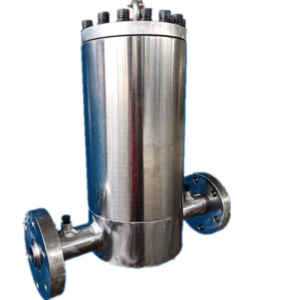
The filter incorporates two cylindrical chambers operating in a “one active, one standby” configuration. Each chamber houses a set of filter elements (typically 17 rod-type cartridges), with a total filtration area of approximately 65 sq. ft. (6 m²) per chamber—a key specification indicator for filter sizing.
2. Heating & Temperature Control System
Each chamber is equipped with an external jacket for precise temperature maintenance. Two heating methods are available:
-
Thermal oil circulation heating
-
Biphenyl (diphenyl) vapor circulation heating
The jacket pressure is rated at ≤0.6 MPa, ensuring stable thermal control up to 320℃.
3. Flow Diversion & Switching Mechanism
-
Diverter Valve: Controls melt flow direction between the two chambers
-
Switching Mechanism: Enables instantaneous flow redirection for no-stop screen changes
-
Auxiliary Valves: Vent valves (top) for air purging; drain valves (bottom) for residual melt evacuation during maintenance
4. Filter Elements
The filter utilizes rod-type (candle) filter elements constructed from multi-layer sintered metal wire mesh, offering:
-
Filtration precision: 3–100 μm (customizable)
-
High dirt-holding capacity
-
Excellent thermal stability
-
Long service life
Working Principle
Continuous Filtration Process
-
Filtration: High-temperature prepolymer melt enters the active chamber through the inlet. As the melt passes through the filter elements, contaminants (gels, carbonized particles, agglomerates) are trapped on the filter media surface, while purified melt exits through the outlet.
-
Pressure Monitoring: The filter operates within a start-up pressure of 2.156 × 10⁶ Pa and a change-over pressure of 8.33 × 10⁶ Pa. When the differential pressure reaches the allowable limit (Max 8 MPa or as specified), the filter elements require replacement or cleaning.
-
No-Stop Screen Change: When the active chamber reaches its differential pressure limit, the diverter valve instantly redirects melt flow to the standby chamber. The spent chamber can then be taken offline for maintenance without interrupting production.
Key Features & Advantages
| Feature | Benefit |
|---|---|
| Dual-chamber design | Continuous production with zero downtime during screen changes |
| High-temperature capability | Operates reliably up to 320℃ |
| High-pressure tolerance | System pressure up to 25 MPa |
| Precise filtration | Accuracy from 3 to 100 μm to meet diverse process requirements |
| Flexible heating options | Choice of thermal oil or biphenyl circulation heating |
| Superior melt quality | Removes gels, cross-links, fish eyes, and hard contaminants |
| Extended service life | High dirt-holding capacity reduces frequency of element replacement |
Maintenance & Safety
Cleaning Criteria
Filter element replacement or cleaning is required when:
-
The differential pressure reaches the maximum allowable value (typically 8 MPa for H-series models)
-
Scheduled preventive maintenance intervals are reached
Cleaning Procedure
-
Close the inlet valve and open the drain valve
-
Purge residual melt and gas using nitrogen through the vent valve
-
Remove the spent chamber for offline cleaning
-
Install replacement filter elements
-
Return the chamber to standby status
Safety Notes
-
Always depressurize the system before maintenance
-
Use appropriate personal protective equipment (PPE) for high-temperature operations
-
Follow manufacturer-recommended torque specifications for all connections
Quality & Compliance
-
Designed and manufactured in accordance with industry standards for polymer melt filtration
-
Fabricated with high-grade stainless steel internals to ensure melt purity
-
Rigorously tested for pressure integrity and filtration performance
Ordering Information
When specifying a prepolymer melt filter, please provide:
-
Polymer type to be processed (PET, PA6, PA66, PP, etc.)
-
Required throughput (kg/h or T/d)
-
Desired filtration accuracy (μm)
-
Operating temperature and pressure conditions
-
Heating method preference (thermal oil or biphenyl)
For technical consultation, custom sizing, or to request a quotation, please contact our engineering team.
 |
 |